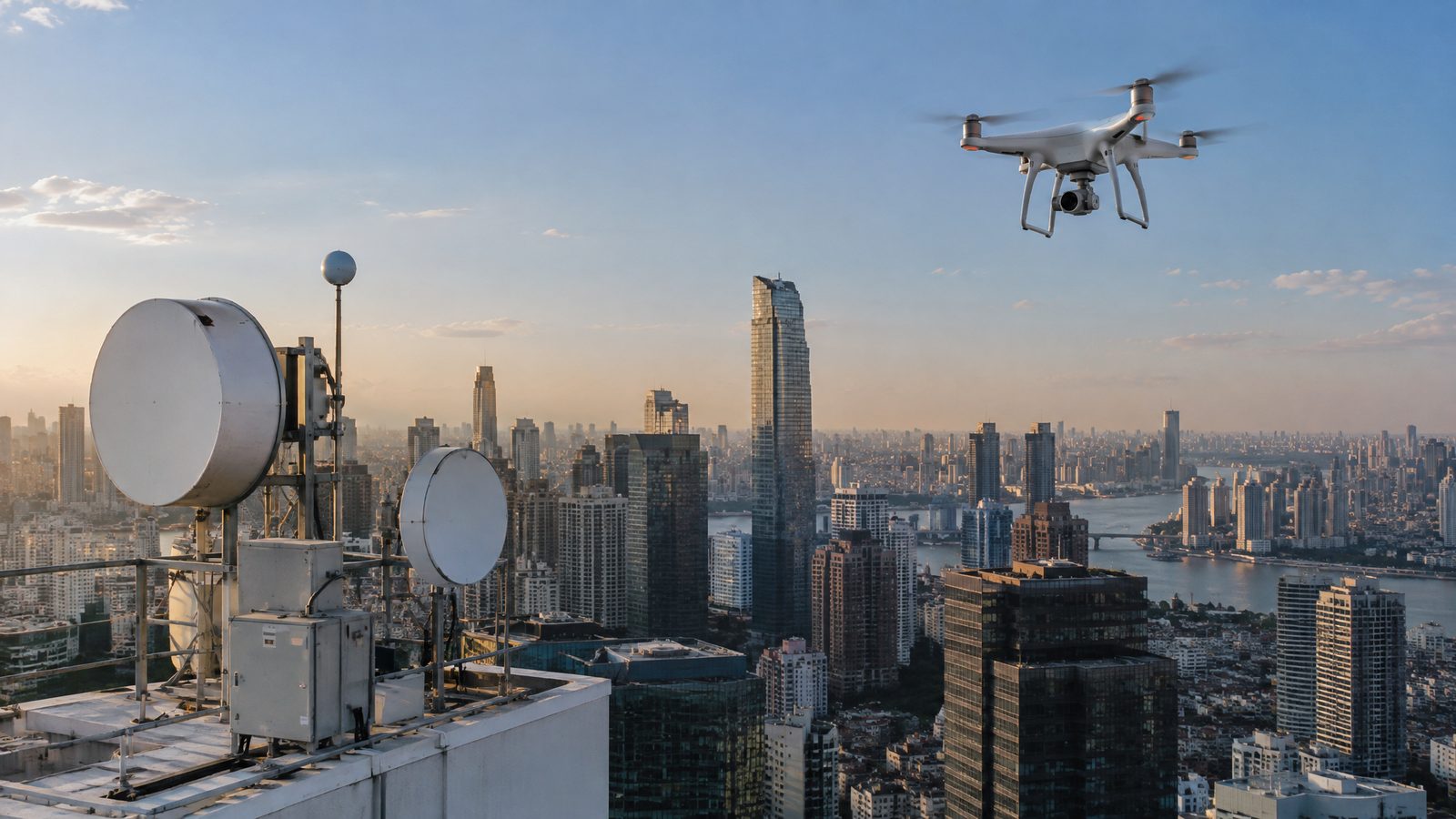
US Drone Rules for Tower and Rooftop Inspection
A plain-English overview of Part 107 limits that matter for towers — structure altitude, controlled airspace, night and BVLOS.
Part 107 basics
Commercial drone inspections in the United States are normally flown under 14 CFR Part 107. The remote pilot in command must hold a current remote pilot certificate, the aircraft must be registered and broadcast Remote ID, and operations follow the standard limits on visual line of sight, airspace and operations over people.
Flying above 400 feet near a structure
Part 107 allows a drone to fly higher than 400 feet above ground level if it stays within a 400-foot radius of a structure and no higher than 400 feet above the structure's immediate uppermost limit. This matters for tall towers — ask providers how they apply it and how they plan the flight.
Controlled airspace, night and BVLOS
Towers near airports may sit in controlled airspace that needs LAANC or DroneZone authorization. Night flights need current training and anti-collision lighting. Corridor or multi-site work beyond visual line of sight needs a waiver or other approval. Ask providers which authorizations they hold, with numbers and expiry dates.
Owner and site permissions
FAA rules cover the airspace, not the site. You still need the tower owner's and landowner's permission, compliance with their drone policy and any site-access, induction and RF-safety requirements. Rules change — always check current FAA guidance; this guide is advisory and not legal advice.
Ready to compare providers?
Describe your project once and get quotes from suitable telecom drone inspection providers.